Finally know what you actually have
You can’t secure what you can’t see.
Your cloud provider says 2,400 instances. Your endpoint tool reports 2,100 agents. Your scanner covers 1,800 IPs. Nobody knows which 600 assets are missing coverage, who owns them, or whether they matter. A simple question like “do all production servers have EDR?” takes an afternoon to answer.
A living asset inventory that builds itself
Automatic discovery and correlation
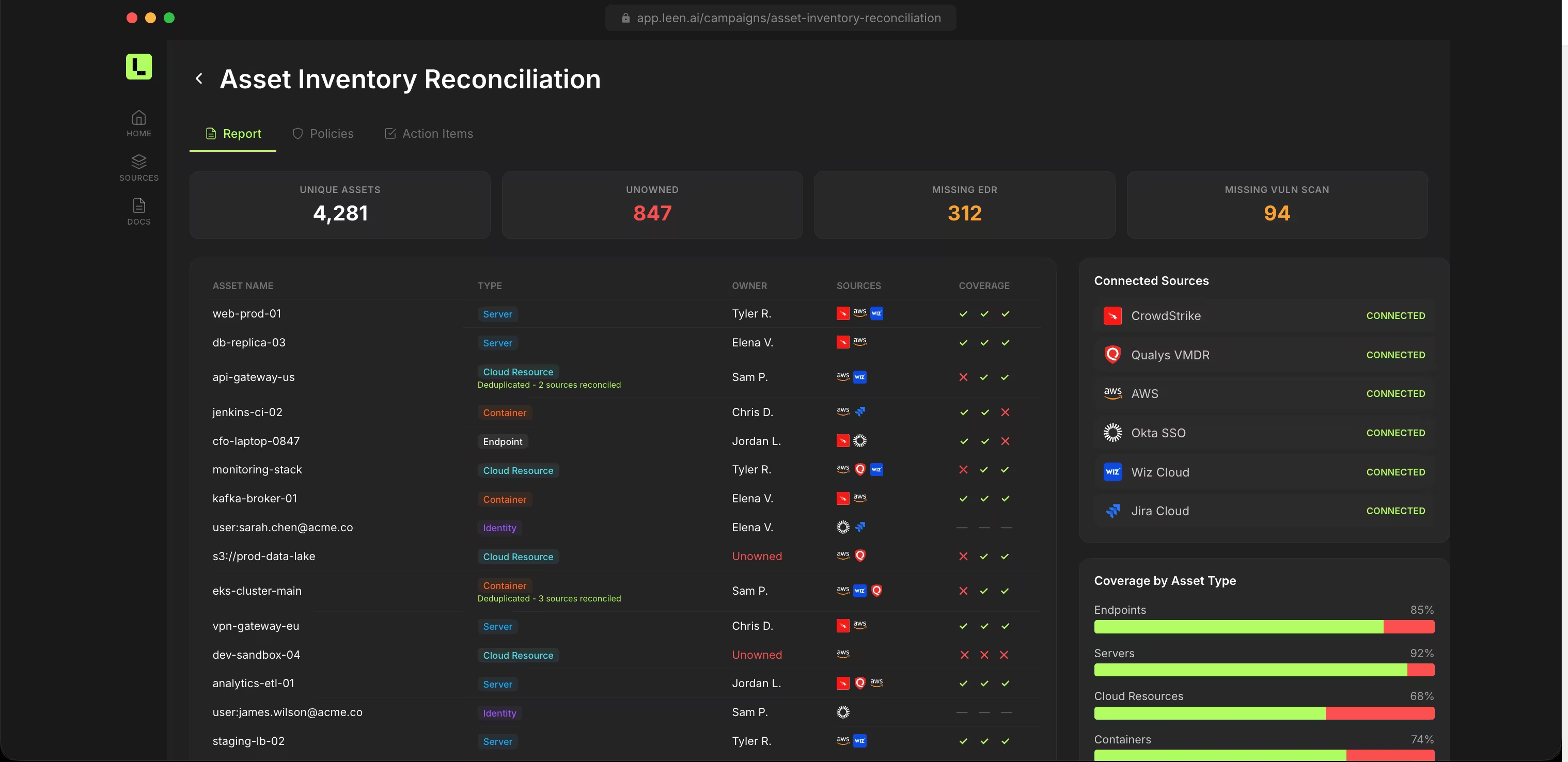
Leen pulls asset data from every connected source and correlates into a single, deduplicated inventory. One asset, not five partial records.
Ownership and context
Every asset enriched with ownership, business service mapping, environment tags, and coverage status.
Coverage gap detection
Continuous checks for expected tooling. Missing EDR? No scanner coverage? Leen flags it and creates a remediation task.
Freshness monitoring
Tracks when each asset’s data was last updated from each source. Alerts when something falls out of sync.
Multi-source correlation
Match and deduplicate across hostnames, IPs, cloud instance IDs, and serial numbers.
Coverage dashboards
At a glance: which assets have EDR, which are scanned, and which fell through the cracks.
Queryable inventory
“All production Linux servers without CrowdStrike” - answered in seconds.
What your team gets
Complete visibility
Know what’s in your environment without manual inventory exercises.
No more coverage gaps
Detect missing tool coverage before it becomes an audit finding or an incident.
Instant answers
When leadership asks “are we covered?” - answer with confidence, backed by real data.


